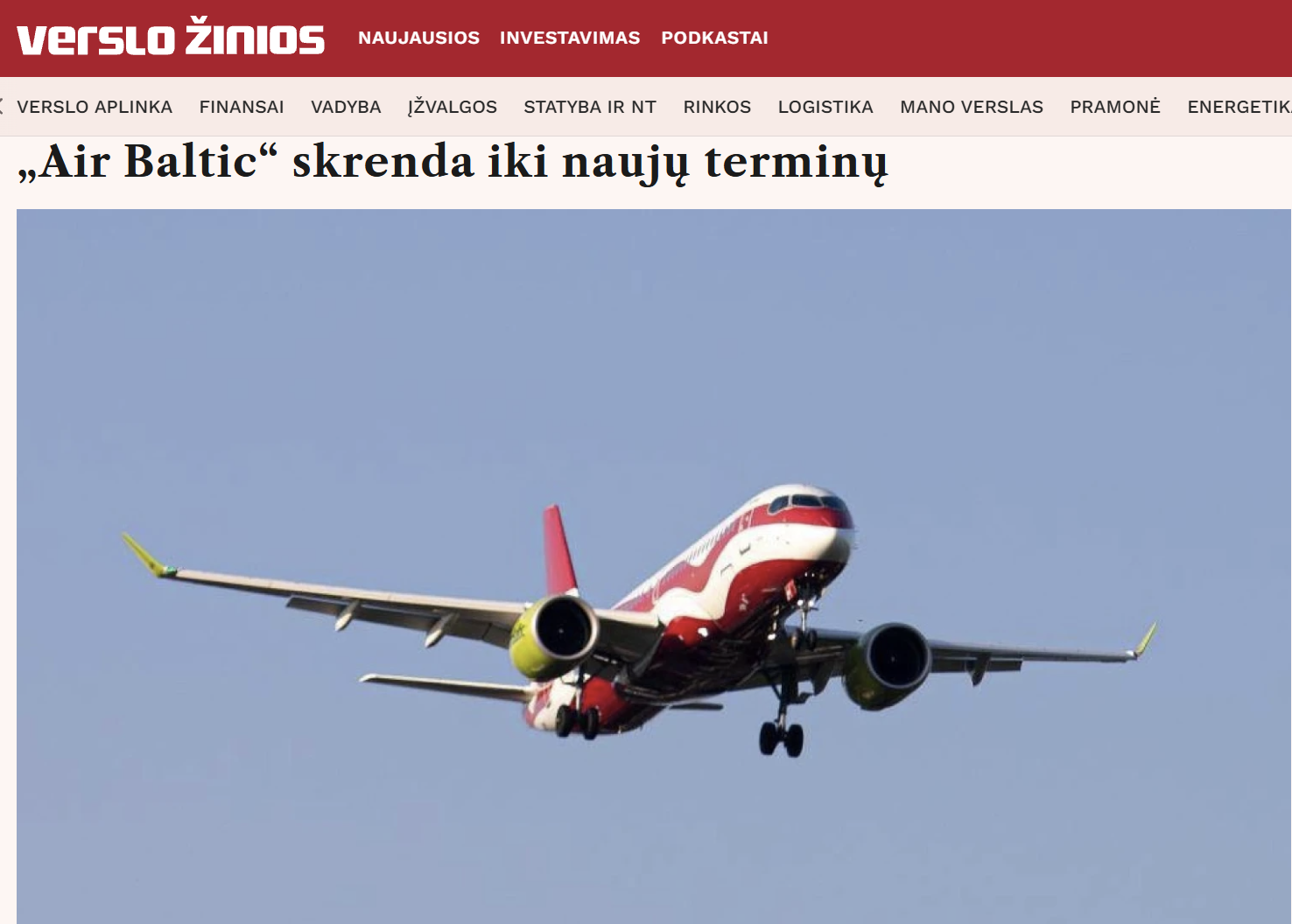
Submission of the Chapter 11 petition automatically triggers protection from the creditors. This gives the airline time to find solutions while creditors are temporarily restricted from taking certain enforcement actions. A non-US company's Chapter 11 petition is considered admissible to US jurisdiction if it has proved having certain property in the US. Under US case law, this condition is satisfied by simply placing a $50k retainer in the US legal counsel account. Commercially, a Chapter 11 strategy is backed by investors' condition.
Under Latvian law (same as in Lithuania), a restructuring application to court does not trigger an automatic creditor stay; the company must apply for interim measures and provide substantial evidence of business viability. This is a critical time when the company remains vulnerable, and restructuring may fail. It is one of the reasons why the success rate of restructurings in Lithuania is only around 12%.
The automatic stay does not mean that airBaltic can continue using aircraft indefinitely without paying rent. US law provides 60 days to reach an agreement with lessors or remedy contractual defaults. If this is not achieved, the aircraft owner may seek to terminate the lease and repossess the aircraft.
In Lithuania, certain essential contracts may also be temporarily frozen during restructuring by means of an interim injunction. However, Lithuania has not implemented the 60-day aircraft repossession rule under the Cape Town Convention.
airBaltic has announced a proposed €350 million debtor-in-possession (DIP) financing facility to support its operations during restructuring. However, the relevant financing documents - a Term Sheet and a Commitment Letter - do not, in themselves, guarantee that the funds will be made available. The applicable conditions must still be satisfied.
Commencing proceedings in the US does not automatically mean that their outcomes will be recognized in Latvia. The practical implementation of the restructuring will also depend on proceedings in the airline's home jurisdiction and the position taken by creditors.
The key takeaway: Chapter 11 gives airBaltic more time and procedural flexibility, but it does not guarantee a successful restructuring. The critical questions are whether the company can actually obtain the financing, reach agreements with aircraft lessors, and ensure recognition of the US proceedings in Latvia.
The direction of the process should become clearer by the end of the year.
Full article read: Verslo žinios