When a violation occurs, the question arises: what is more important – to punish as quickly as possible, or to help the company correct itself so that a similar situation does not happen again?
Currently, for a single violation of environmental legislation, a company may face up to seven different enforcement measures – as if it had entered seven circles of hell.
In practice, each violation may bring administrative penalties for responsible individuals. Legal entities are subject to economic sanctions. In addition, authorities may issue mandatory orders, temporarily suspend activities, or revoke pollution permits. The very fact of the violation is made public – a reputational penalty that can seriously harm the company’s image. On top of this comes civil liability for environmental damage, and in cases of large-scale harm, even criminal liability.
The logic seems simple: you violate – you get punished. However, in reality, this system is oriented not toward assistance and damage prevention, but toward the formal recording of violations.
Even the slightest deviations – for example, submitting a report a day late – are assessed just as strictly as intentional violations. In other words, whether you made a formal discrepancy or a deliberate breach, the company ends up at the same starting point of liability, regardless of the actual harm caused.
The principle of methodological assistance today remains only on paper. In practice, it is not applied during inspections. Companies are told: “You are in violation.” Companies respond: “Technologically, it’s impossible, the system – for example, GPAIS – does not function properly.” And the AAD’s position is: “others manage to ensure compliance.” Yet they provide neither best-practice examples nor advice on what could be done differently.
We also face contradictions in the law.
Inspection rules state that the purpose of planned inspections is not only to record violations, but also to provide methodological assistance. In other words, control should be broader than simply “catching” violations. However, the same rules also stipulate that once an inspection begins or a notification of inspection is issued, methodological assistance no longer applies.
The result – it is impossible to receive help precisely when it is most needed: during the inspection.
Meanwhile, AAD has accumulated extensive experience: it sees why violations arise, what causes damage, and how it can be reduced (for example, during fires). Therefore, during inspections, the authority could share this experience and provide practical advice.
AAD should change its approach: not only punish for specific, isolated violations, but also actively foster positive environmental change; be able to advise companies on what they should do better to prevent harm or reduce its consequences.
For assessing violations, I suggest applying a traffic light principle.
If the violation is serious, intentional, or dangerous, sanctions must be unavoidable and strict.
But if the error is more formal, the company should be given the opportunity to prepare a correction plan, eliminate the causes, and solve the problem. In such cases, applying liability would not make sense. If the company fails to implement the plan or eliminate the causes, then the full liability mechanism is activated.
In this way, everyone wins: businesses gain clarity and a chance to improve, the state gains fewer procedures and more prevention, and the environment – genuinely less harm.
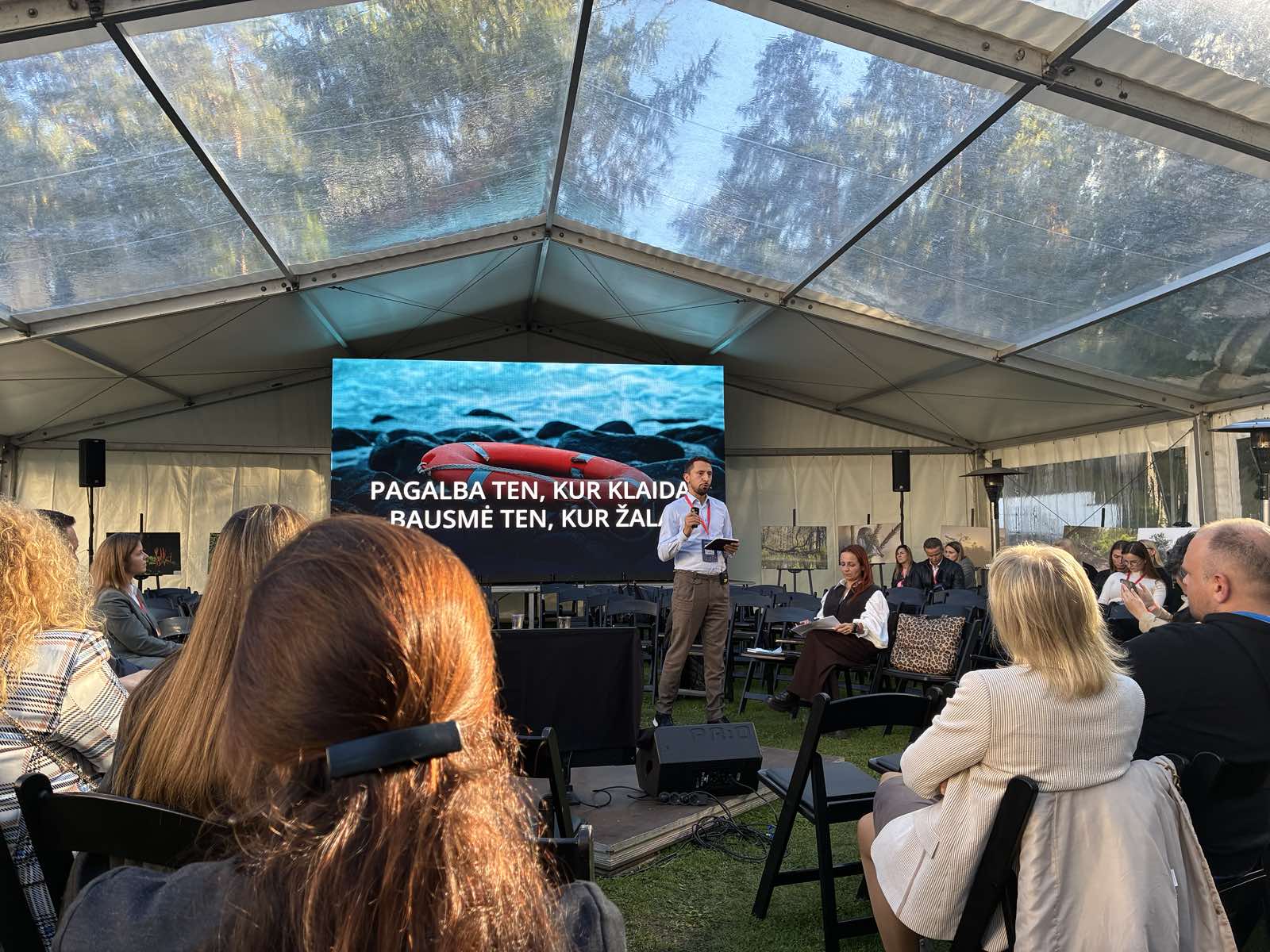
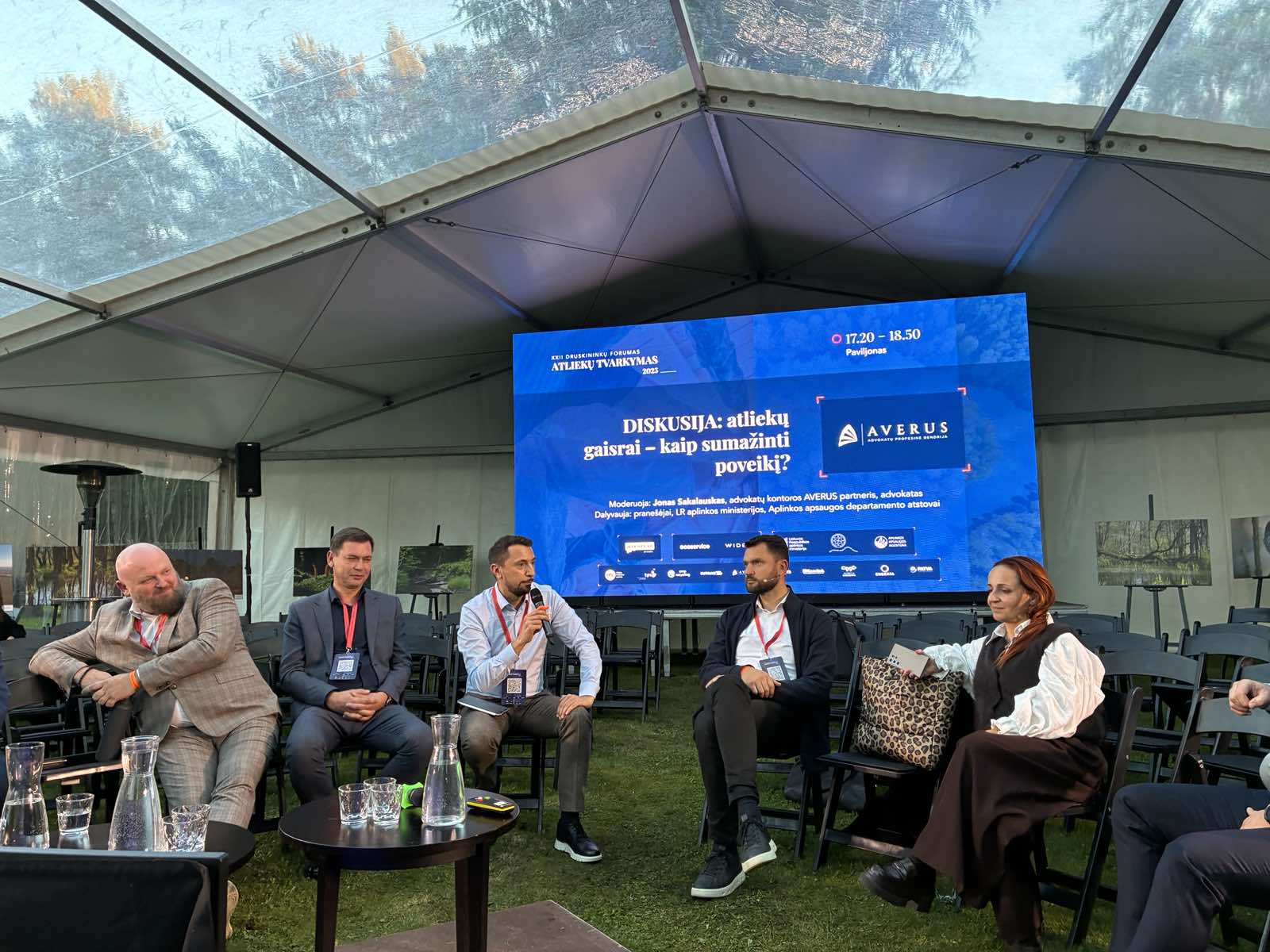
Jonas Sakalauskas, based on a presentation at the Druskininkai Waste Forum 2025.